Owry Partners with Schädel Engineering as Germany Makes BIM Mandatory for Federal Infrastructure
The agreement marks Owry AI's entry into the German infrastructure market at a pivotal moment: 2026 is the year Building Information Modeling (BIM) became a mandatory standard for federal trunk-road and infrastructure planning across Germany.
A regulatory shift with industry-wide consequences
Germany's move to require BIM on federal infrastructure projects is a milestone for the country's engineering sector. It brings roads and infrastructure planning in line with the same digital modeling standards already reshaping architecture and building design worldwide.
But regulatory mandates rarely arrive without growing pains. As BIM becomes the baseline requirement for winning and executing public infrastructure work, demand for engineers with hands-on BIM modeling experience has surged, and the market has not kept pace.
Firms are feeling the strain directly in headcount. An engineering firm of 25 people that once operated comfortably with three BIM modelers now needs seven or more to meet the same workload — a jump that more than doubles the specialized staffing this single skill set requires. That is a significant new labor cost layered on top of every project budget, before a single clash has been resolved or a single bid has been submitted.
Where the real cost hides: clash detection
BIM's value goes beyond visualization. Clients now rely on the 3D models these tools produce to generate Bills of Materials (BOM), manage competitive bidding, and run clash detection as a standard quality check before construction begins.
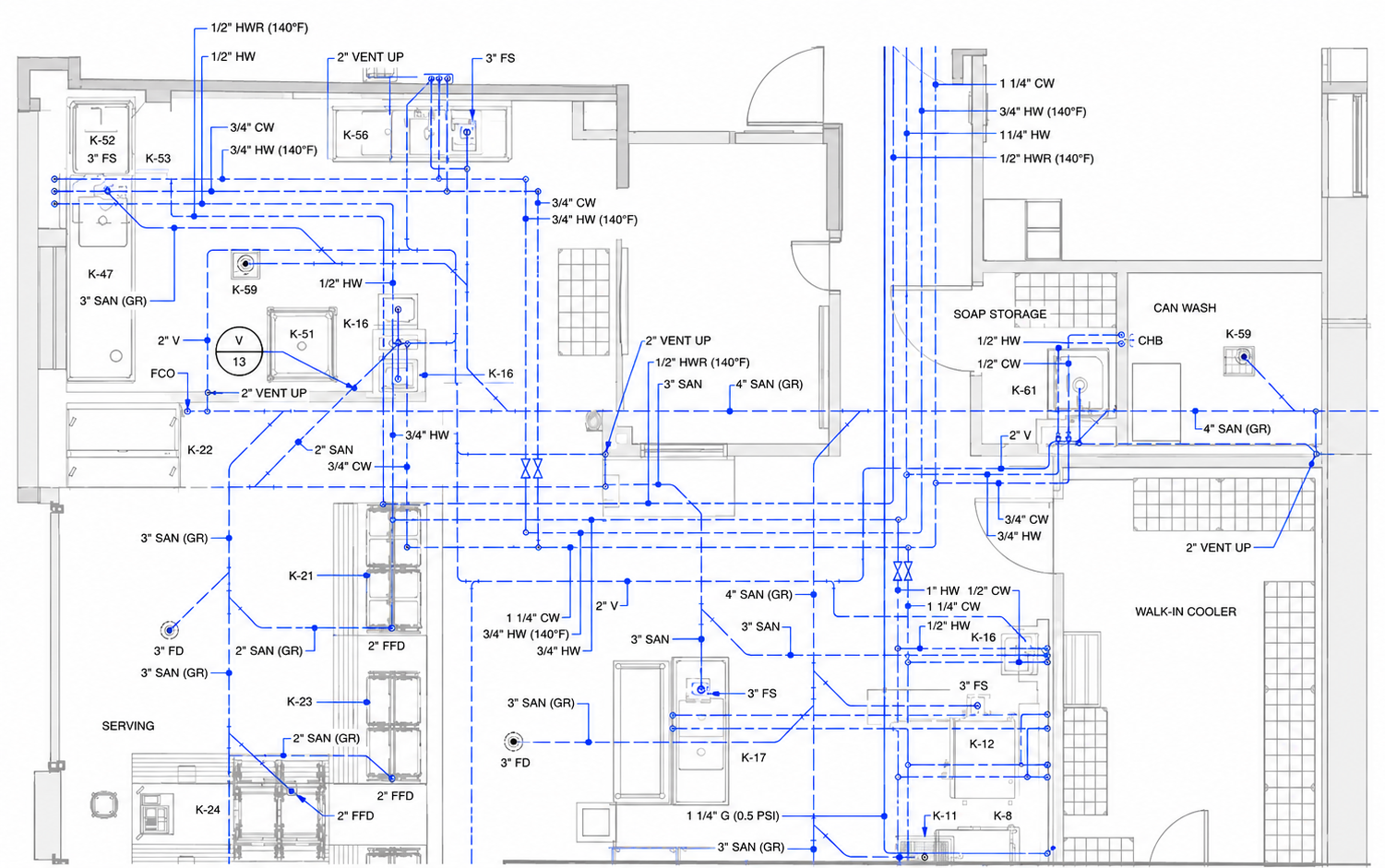
Here is the problem every firm working in BIM eventually runs into: every 3D model built inside BIM software generates geometric clashes. Pipes cross beams, utilities collide with structural elements, and systems overlap in ways that only surface once someone looks closely. Most tools stop at flagging these clashes, leaving engineers to resolve each one by hand. Left unresolved, that manual fixing costs real engineering hours: teams routinely spend up to five hours in coordination meetings debating conflicts that could be fixed automatically — time that adds up fast across a firm's active project load.
How Owry AI fits into the workflow
Most tools on the market stop at detection: they flag where geometry collides and leave engineers to work out the fix, one clash at a time. Owry AI goes a step further. Our platform detects clashes and resolves them automatically, adjusting the model directly instead of just producing a report for someone to interpret and act on manually.
That distinction is the core of what we do. Detection alone still leaves the coordination meeting on the calendar. Automatic resolution takes it off. The five hours engineers were spending debating a single set of clashes gets returned to them as time they can put toward design, delivery, and the next project in the pipeline — not toward fixing errors a system can fix on its own.
Partners working with Owry AI see returns across four areas:
- Clashes fixed automatically, not just flagged — errors are resolved at the source, so engineers aren't stuck manually correcting geometry the system already knows how to fix.
- Engineering time given back — hours once lost to coordination meetings return to design and delivery work.
- Faster project delivery — automatic resolution removes the back-and-forth that stretches timelines from model to construction-ready output.
- More capacity without more headcount — firms can bid on and deliver more projects with the same team size, instead of hiring their way through rising BIM demand.
A foundation for what comes next
The shift to mandatory BIM is a genuine step forward for the engineering industry, and it lays the groundwork for the next one: applying AI to manage the sheer volume of information BIM now generates. But that future depends on getting the fundamentals right today. The models feeding this pipeline have to be high quality and construction-ready, or the benefits of BIM adoption — faster bidding, cleaner coordination, better outcomes — never fully materialize.
Owry AI's partnership with Schädel is a step toward that standard, giving one of the Stuttgart region's established infrastructure engineering firms the tools to meet Germany's new BIM requirements without the overhead of scaling headcount to match demand.
See clashes resolved on your next project.
Book a demo and we'll show you Owry detecting and automatically resolving clashes on a real 3D model.
Book a demo →